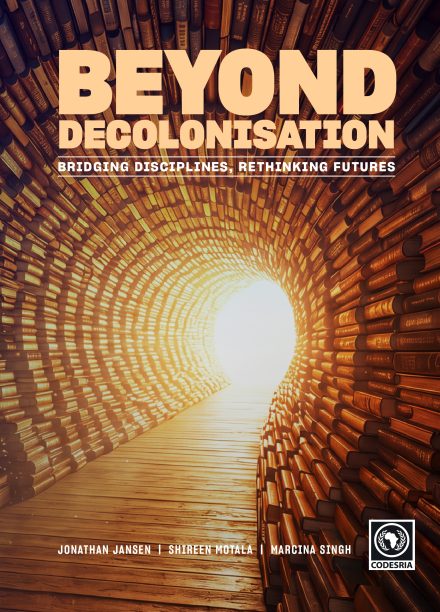
Beyond Decolonisation: Bridging Disciplines, Rethinking Futures
2026
##plugins.themes.clarte.stats.views## : 10
Dakar, CODESRIA, 2000, 88 p., ISBN 9782869780798
The African Charter on Human and People’s Right was adopted by African governments as far back as 1986. Yet the incidence of human rights violations remains a cause for concern on the continent. The deregulation and privatisation of African economies in response to global economic pressures and interests has led to growing social and economic inequalities, and increasing human rights abuses. Rising crime rates tend to harden public attitudes towards criminals, breeding acceptance for intolerance, ill-treatment, torture and the death penalty. Shoot-to-kill policies are now common. Millions of civilians have lost their lives in wars fuelled by unregulated international arms trade and the presence of foreign troops and mercenaries.
Occurring simultaneously with all these developments is the presence of an increasing number of African human rights defenders. These men and women document and denounce human rights abuses, challenge repressive, discriminatory and dictatorial regimes, and seek redress and justice for many victims and families. They provide services where the state has withdrawn or given up, and take on advocacy or educational roles. They testify to the changing nature, growing strength and importance of African civil society.
Ukweli combines the experiences of African human right defenders to present a step-by-step guide for monitoring and investigating human rights abuses in Africa. This practical problem-solving Handbook and the accompanying booklets have been written with and for African human rights defenders to strengthen and professionalise human rights work on the continent. Accurate and consistent research is an essential element to human rights campaigning, advocacy and lobbying. It is crucial to building and sustaining the legitimacy and reputation of human rights organisations and activists, locally, nationally and internationally. Ukweli is a Swahili word that can refer to both truth and fact. In Customary Law, Ukweli signifies the findings of impartial investigation that are irrefutable. Using this philosophy, the Handbook provides indispensable guidelines for tackling obstacles, ensuring accuracy, eliminating partiality and seeking redress for human rights violations.
is currently Assistant Editor (Publications) for the Council
for the Development of Social Science Research in Africa (CODESRIA), Dakar,
Senegal. His previous experience includes working as a journalist for the print
media and consultant editor for several organisations in Nigeria and Senegal.
has been working for Amnesty International since 1995, first
as research policy co-ordinator, focusing on methodology and standards of
research, and currently as the head of the Secretary-General’s Office. Before
joining Amnesty International, she worked at the Centre for Refugee Studies
of York University in Toronto where she pursued research on international and
African refugee movements, refugee women, gender and development, and
taught at Atkinson College, York University. She holds a Ph.D. in Political
Science from the New School for Social Research, New York.
is the Executive Director of the Zimbabwe Human Rights
Association (ZimRights), based in Harare. Before working in the fields of
human rights promotion, protection and defence, he was a teacher and trade
unionist.
is currently the head of the Monitoring of Human Rights and
Urgent Alert Unit at RADDHO (Rencontre Africaine pour la defense des droits
de l’homme), a human rights NGO based in Senegal. She previously worked
as the head of RADDHO’s Women and Children’s Rights Commission. She
investigates human rights violations, works with lawyers to provide legal aid
to victims of human rights violations, and conducts human rights awarenessraising
activities with the relevant authorities and the public at large. She holds
a Master of Science in Education (M.Sc. Ed.).
has worked for the International Secretariat of Amnesty International
since 1994, as a press officer, researcher and media director. Before
joining Amnesty, he was a writing fellow of the Institute of Current World
Affairs based in Zimbabwe, and a professional journalist.
is the founding member and deputy chairman of the Non-
Governmental Organisation “La Voix des sans-voix pour les droits de l’homme”
(VSV) of the Democratic Republic of Congo. VSV was founded in 1983 and
worked underground for seven years. Its main activities focused on human
rights education and awareness-raising, monitoring human rights violations,
and assistance to victims of human rights violations. Bruno Lyengo is currently
living in the Netherlands.
is advocate of the High Court of Kenya and Chair of the
International Commission of Jurists, Kenya section. He litigates and practises
law in the High Court and Court of Appeal with particular emphasis on human
rights issues. He has defended many human rights activists in court facing
such charges as unlawful assembly, incitement, sedition, etc. He has represented
victims of torture seeking compensation in court, as well as families of victims
of death in custody in public inquests. Mr M’Inoti has also lectured in the
Department of Public Law of the University of Nairobi. He holds a Bachelor of
Law degree and a Master of Law degree from the University of Nairobi.
worked for Amnesty International as a campaigner and researcher
on West and Central Africa. She has also worked with human rights
defenders across Africa and in Uganda with a national local human rights
organisation. More recently, she has been working on a programme learning
with the development agency, ActionAid. She is currently a consultant with
Article 19, an NGO working on freedom of expression, and Save the Children.
currently co-ordinates the Academic Freedom and Child and Youth
Studies Programmes for the Council for the Development of Social Science
Research in Africa (CODESRIA), Dakar, Senegal. Ebrima Sall holds a Ph.D.
in sociology from the University of Paris I Sorbonne, France. Among his
publications include Women in Academia: Gender and Academic Freedom in
Africa, Dakar: CODESRIA, forthcoming.
A nurse by profession, is currently working for the
Women’s Health and Development Program of the Mother Patern College of
Health Sciences of Don Bosco Polytechnic in Liberia. The objective of the
Women’s Health and Development Program is to create awareness on the issues
of violence against women with certified midwives and birth attendants in order
to enable women to see a way around violence and do something about it. Ms
Rojatu Turay-Kanneh has conducted research on war-time violations against
Liberian women and has trained certified midwives to enable them to work
with traditional birth attendants and create awareness on violence against
women.
is currently co-ordinator of the Special Programme on
Africa of the Dutch Section of Amnesty International where he develops and
implements projects to support the human rights movement in Africa. His
previous positions have included: head of campaigns in the Dutch Section of
AI, co-ordinating a programme for returned development workers in the
Netherlands, the Associate Repartriating Officer in the UNHCR repatriation
programme in South Africa, and development work in Zambia.
APA Adebowale, S., Callamard, A., Chimhini, D., Dieye, A., Kelso, C., Lyengo, B., M’Inoti, K., Norris, C., Sall, E., Turay-Kanneh, R., & Horst, P. (2000). Ukweli: Monitoring and Documenting Human Rights Violations in Africa: A handbook. CODESRIA. https://doi.org/10.57054/codesria.pub.332
Chicago Adebowale, Sulaiman, Agnès Callamard, David Chimhini, Aminata Dieye, Casey Kelso, Bruno Lyengo, Kathurima M’Inoti, et al. Ukweli: Monitoring and Documenting Human Rights Violations in Africa: A handbook. Dakar: CODESRIA, 2000. https://doi.org/10.57054/codesria.pub.332.
MLA Adebowale, Sulaiman, et al. Ukweli: Monitoring and Documenting Human Rights Violations in Africa: A handbook. CODESRIA, 2000. https://doi.org/10.57054/codesria.pub.332.
Jonathan Jansen, Shireen Motala, Marcina Singh
2026
##plugins.themes.clarte.stats.views## : 10
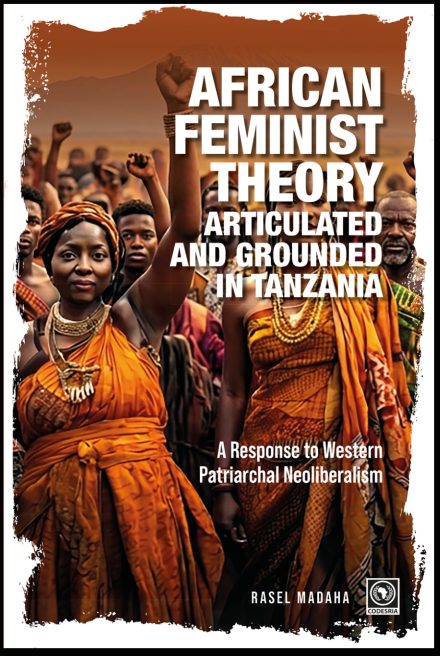
Rasel Madaha
2026
##plugins.themes.clarte.stats.views## : 9
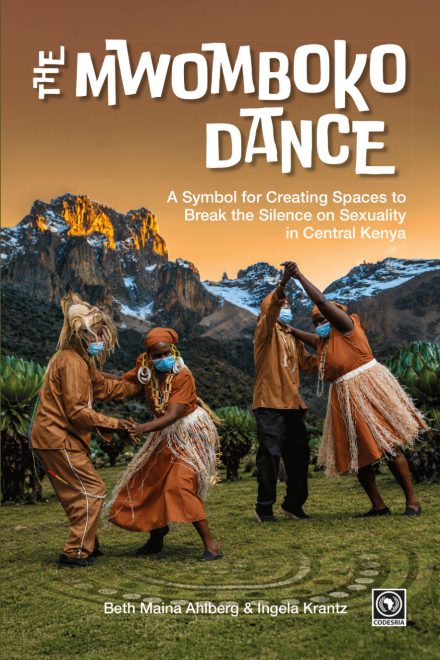
Beth Maina Ahlberg, Ingela Krantz
2026
##plugins.themes.clarte.stats.views## : 8
Selly BA, El Hadji Malick Sy Camara, Ousmane BA
2026
##plugins.themes.clarte.stats.views## : 1 292
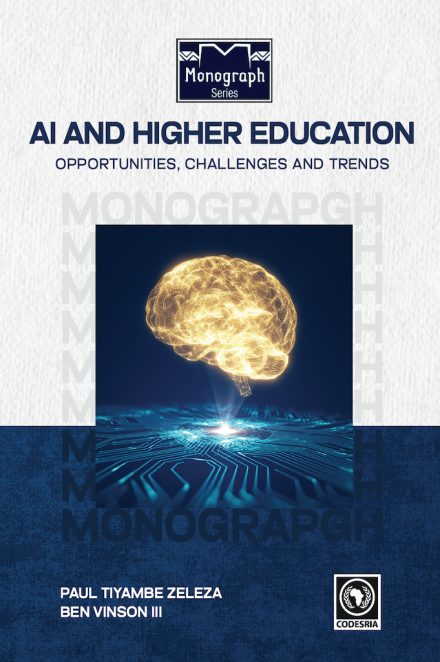
Paul Tiyambe Zeleza , Ben Vinson III
2025
##plugins.themes.clarte.stats.views## : 15
Nkosinothando Mpofu, Phillip Santos, Admire Mare, Hugh Ellis
2024
##plugins.themes.clarte.stats.views## : 780
Paul Tiyambe Zeleza
2024
##plugins.themes.clarte.stats.views## : 502
2024
##plugins.themes.clarte.stats.views## : 945 ##plugins.themes.clarte.stats.downloads## : 59
Abdallah Saaf
2023
##plugins.themes.clarte.stats.views## : 1 006
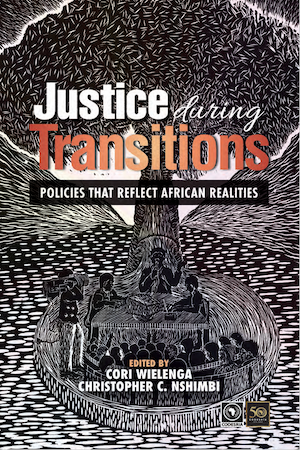
Cori Wielenga, Christopher Changwe Nshimbi
2023
##plugins.themes.clarte.stats.views## : 2 661
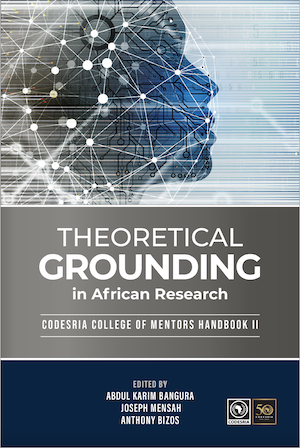
Abdul Karim Bangura, Anthony Bizos, Joseph Mensah
2023
##plugins.themes.clarte.stats.views## : 736 ##plugins.themes.clarte.stats.downloads## : 642
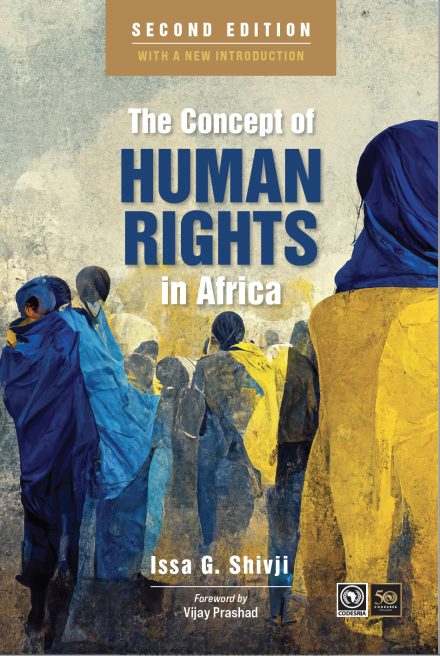
Issa G. Shivji
2023
##plugins.themes.clarte.stats.views## : 1 497